


PVC Vs. FRP Wall Panels: Which Is Better For Shipping Containers?

Shipping containers get converted into a lot of things these days, like mobile kitchens, cold storage units, modular offices, and on-site workshops. The appeal is obvious as they're durable, stackable, and relatively affordable to repurpose. But the interior walls are a different story that needs special attention. The bare steel interiors corrugate, sweat, and rust. You need a wall panel system that handles the unique conditions inside a converted container, and the two materials that come up most often are PVC and FRP wall panels. Here's how they actually compare.

What Makes Container Interiors Tough on Materials
Shipping containers are steel boxes. They expand and contract with temperature changes, trap humidity, and create condensation on interior surfaces. Any wall panel installed inside a container must handle moisture from two directions: environmental humidity and the container's thermal behavior. That's before you factor in the application itself, whether it's a food prep space, a wash-down area, or a climate-controlled grow room. While most materials struggle with that combination, FRP holds up reasonably well, but PVC container wall panels hold up better.
The Moisture Problem: Who Performs Better?
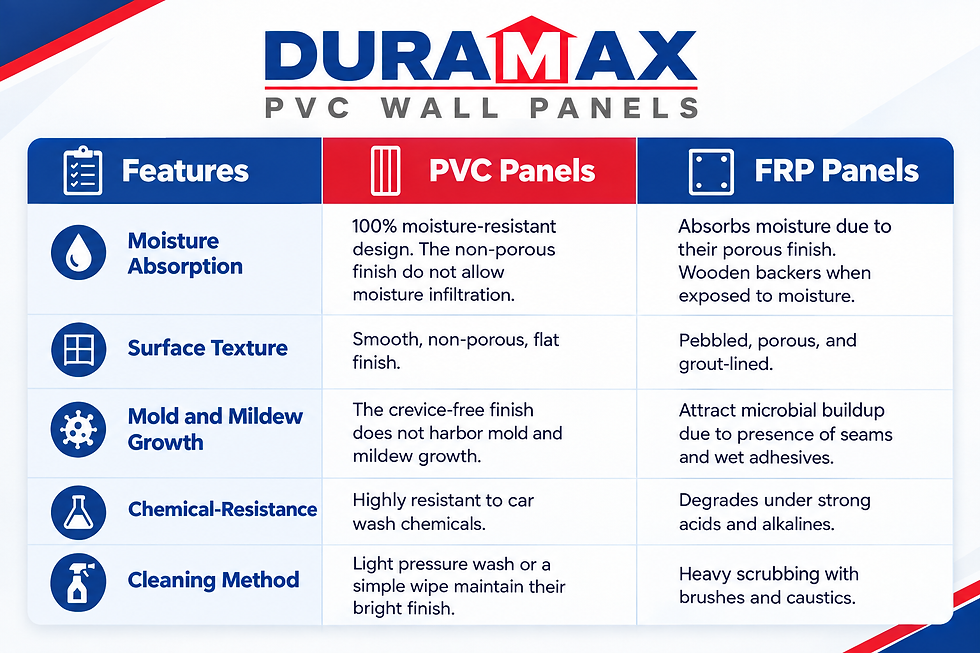
FRP panels are semi-porous, and the fiberglass mat beneath the surface layer can absorb moisture over time, especially at cut edges and in the crevices. In a container environment where condensation is a near-daily occurrence, that absorption leads to delamination. The surface layer separates from the substrate, panels bubble and warp, and the wall system begins to fail from the inside out.
PVC panels are inherently moisture-resistant, featuring a non-porous surface. They have no wooden backers to absorb moisture and no layers to separate. In high-condensation environments like shipping containers, the inner webbed solid construction of PVC panels makes the difference, keeping walls intact years down the line.
Cleaning and Sanitation: Which One Meets the Hygiene Requirements
Converted containers used for food prep, mobile kitchens, or storage of perishables need walls that can handle regular cleaning. FRP surfaces are textured, which gives bacteria and residue places to settle. Getting a genuinely clean surface requires more effort and more aggressive cleaning agents, which degrade the FRP surface over the years.
PVC panels, on the other hand, have a smooth, stain-resistant surface that is easy to clean with a wipe-down or pressure wash. They also have an antibacterial coating to eliminate the risk of contamination. PVC panels also adhere to stringent hygiene standards and are CFIA and FDA compliant.
Installation in Tight Spaces: PVC Panels Have Hassle-Free Installation
Container interiors are narrow and awkward to work in. PVC panels are lighter than FRP and interlock using the tongue and groove mechanism. That matters when you're working in a confined space with little room to maneuver. Faster installation translates into lower labor costs, which adds up quickly on container conversion projects.
Final Word: So Which One Wins?
For shipping container applications, PVC is the more practical choice. It handles moisture better, cleans easier, installs faster, and doesn't carry the delamination risk that makes FRP a liability in high-condensation environments. Explore the PVC shipping container wall panels from Duramax for enhanced durability, longevity, and resistance to moisture and mold. Available nationwide at factory-direct prices and with a limited lifetime warranty.


Comments