


Are Vinyl Panels Resistant to Mold in Food Processing Units?

Stepping into a food processing plant means entering an environment that fights unseen microscopic threats. From meat packing houses and dairy plants to ready-to-eat meal prep facilities, high humidity, steam, washdowns, and heat are part of daily operations. Unfortunately, those exact conditions are also a paradise for microbial growth, particularly mold and mildew.
Keeping mold out of the facility is critical to food safety, regulatory compliance, and protecting brand reputation. A single mold outbreak can contaminate product batches, trigger costly product recalls, lead to severe health code violations, or even force temporary facility shutdowns.
This brings us to a question that facility managers ask when renovating their walls. Are vinyl wall panels truly resistant to mold in food processing units? The short answer is yes. Understanding why they perform so well comes down to material science, panel design, and installation methods.

The Consequences of Mold Attacks- Why Traditional Walls Fail?
Mold spores are everywhere in the atmosphere. To grow and colonize a surface, mold requires three basic ingredients:
Moisture- humidity, steam, or standing water
Nutrients-organic materials like wood, paper, yeast, sugar, or animal fats
A porous surface- absorbs water and traps microscopic food particles
Traditional wall solutions fall short because they inadvertently provide these ingredients-
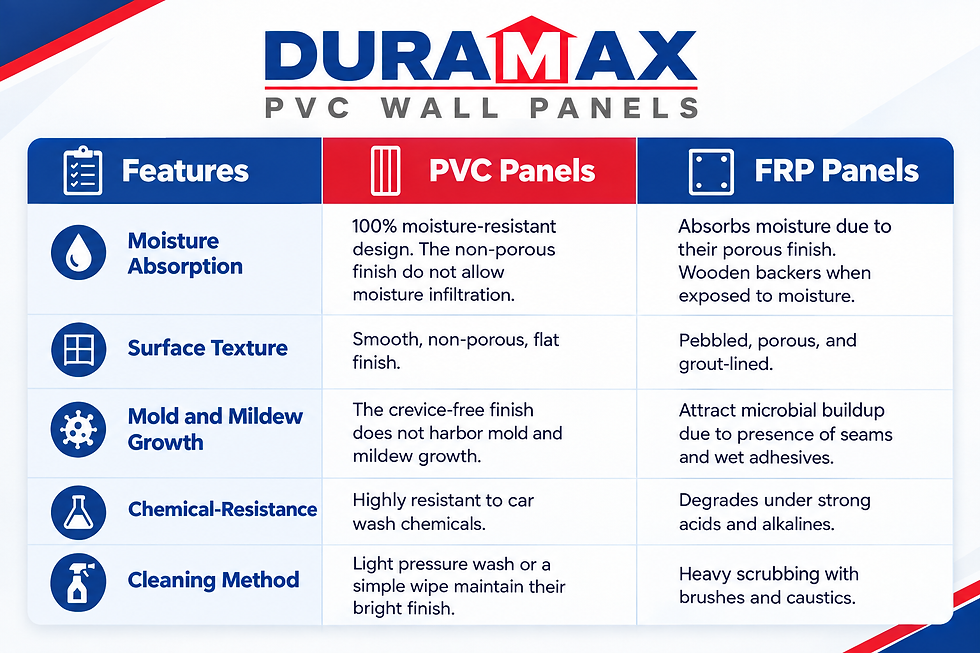
Drywall-Even moisture-resistant drywall uses paper facing, which serves as an abundant organic food source for mold once damp.
FRP Sheets-While the face of an FRP sheet is made of plastic, FRP installation requires glue and wooden backer boards. Moisture creeps behind the thin sheets, gets trapped, and rots the wooden backing out of sight.
Grout Lines-Tile grout lines are crevice-filled wall materials. Microscopic food particles, grease, and moisture settle into these tiny pores, creating hidden mold colonies that survive surface scrubbing.
How Vinyl Panels Prevent Mold Growth-Explaining the Advantages
1. No Need for Organic Material
PVC wall and ceiling panels require no wooden substrate for support, so mold spores cannot feed on it. Even if a mold spore lands on a clean vinyl panel, it cannot establish a root system or extract nutrients from the material itself. Without a food source, mold cannot grow.
2. No Crevices on Wall Finish
PVC panels offer a smooth surface where water, steam, grease, and liquid food splatters cannot penetrate the material. Liquids remain on the surface rather than soaking in, so moisture evaporates or is wiped away during routine cleaning shifts, leaving no chance for mold growth.
3. Elimination of Wooden Boards
One of the biggest culprits behind hidden mold outbreaks in food processing plants is moisture trapped behind the visible wall cladding. Vinyl wall panels use internal webbed truss designs that provide high strength and rigidity without wood support. Install them directly onto wall studs or existing solid walls. By eliminating plywood, you remove the primary organic fuel source where hidden mold breeds unseen.
4. Smooth Surface Ensures Cleanliness
Tiny cracks, exposed seams, and textured grooves are the areas where food particles and moisture collect. Compared to traditional walls, vinyl panels create a continuous surface with tightly fitted joints. Fasteners are concealed within the interlocking lip, leaving no open screw holes or exposed rivets to harbor dirt or fungal spores.
Remain Intact During Cleaning
Food processing walls must stand up to sanitation routines. Facilities routinely rely on water sprays and chemical sanitizers like peracetic acid and quaternary ammonium compounds.
Chemical-induced microcracks become breeding grounds for mold and bacteria. Vinyl panels stand up to repeated high-pressure washdowns and chemical sanitizers without cracking, peeling, or eroding. Their smooth finish allows cleaning crews to blast away grease and food residue in half the time. This keeps organic buildup from sitting long enough to compromise hygiene.
Meet USDA and FDA Standards
Vinyl panels maintain a hygienic barrier so that they can comply with regulatory requirements. Regulations, such as FDA and CFIA, require food production facilities to maintain non-absorbent surfaces that prevent contamination. Installing vinyl panels helps quality control teams pass inspections with confidence, ensuring the wall surfaces meet high sanitary standards.
Redefine Your Food Processing Facility with Duramax Vinyl Panels
Duramax Vinyl Panels have been a trusted choice for food processing facilities for over 40 years. As a prominent PVC panel supplier, Duramax Vinyl Panels are FDA-compliant and highly resistant to chemicals. You can customize vinyl panels in white, gray, and black shades. We ship vinyl panels to your destination within two weeks. Request a free consultation now.


Comments