


PVC vs FRP Panels: 7 Reasons PVC Comes Out Ahead

When choosing wall panels for commercial, industrial, or high-moisture spaces, PVC and FRP panels often make the shortlist. Both are designed to provide a durable alternative to conventional wall finishes. But beyond the initial installation, PVC panels offer several practical advantages that can make them the better long-term choice.
So, PVC vs FRP panels: which one comes out ahead? Here are seven reasons PVC deserves serious consideration.

1. PVC Handles Moisture Without the Hassle
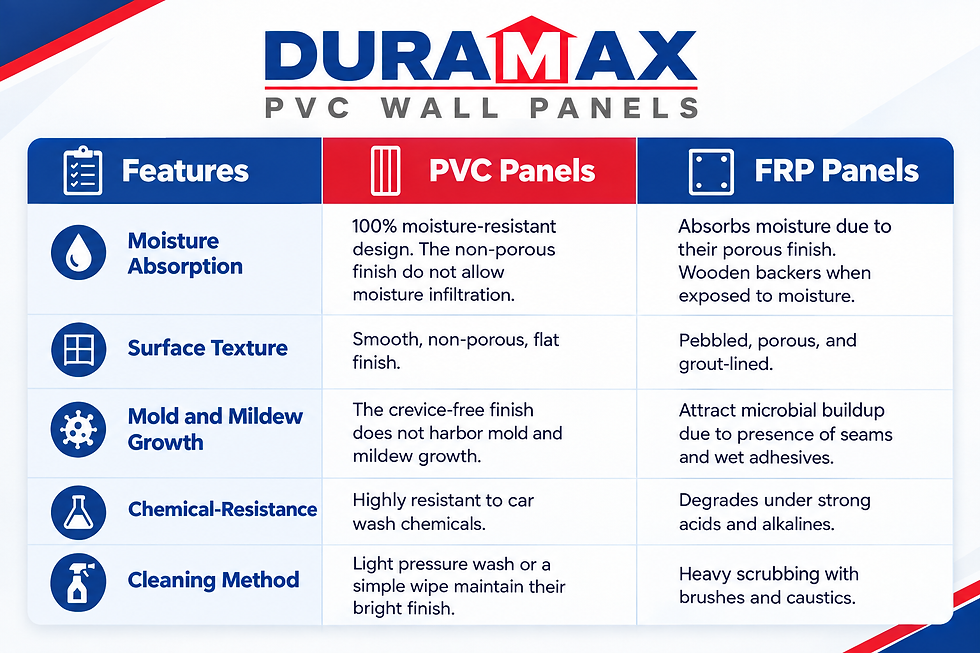
PVC panels are naturally resistant to water and moisture. That makes them particularly useful in bathrooms, commercial kitchens, food-processing areas, car washes, basements, and other damp environments.
FRP is vulnerable in wet locations due to its wooden backer boards. With properly sealed joints and installation, PVC provides a dependable moisture-resistant wall surface for decades.
2. PVC Is Easier to Clean
In facilities where hygiene matters, wall surfaces need to be easy to wash regularly. PVC panels have a smooth, non-porous surface that can be wiped down without much effort. This is especially useful in restaurants, healthcare environments, warehouses, and food-processing facilities where dirt, spills, and residue cannot be allowed to build up.
3. No Fiberglass Skin to Deal With
One of the biggest differences between PVC and FRP is right in the name. FRP wall panel contains fiberglass reinforcement. So, cutting and handling FRP can release irritating fiberglass particles, so installers generally need to take additional precautions. PVC panels are easier to cut and handle, making installation more straightforward for many projects.
4. PVC Offers Strong Impact Resistance
Walls in busy commercial environments take plenty of wear and tear. Equipment, carts, tools, and daily traffic can all result in accidental impacts. ASTM-certified PVC wall panels are designed to withstand everyday wear and impact, helping walls maintain their appearance in demanding environments.
5. Installation Can Be Simpler
PVC panels are relatively lightweight and can be installed using common tools and mechanical fastening systems, saving time and effort. That can translate into less complicated installation and potentially lower labor requirements compared with more demanding wall-finishing systems.
6. Lower Maintenance Means Long-Term Value
The real cost of a wall panel isn't simply its purchase price. Cleaning, repairs, labor, and replacement all contribute to the total cost over time. PVC's moisture resistance, easy-clean surface, and low-maintenance characteristics can make it a practical investment for facilities that need walls to perform year after year.
7. PVC Offers Greater Versatility
PVC panels interlock for a watertight finish and a seamless surface, making them suitable for everything from commercial facilities to residential spaces. Manufacturers like Duramax deliver panels in ½” thickness, 16” width, and customizable length for use in spaces of different sizes.
PVC vs FRP: Which Should You Choose?
PVC panels offer a compelling combination of moisture resistance, easy maintenance, durability, ease of handling, and design flexibility compared to FRP panels. For projects where long-term performance matters as much as installation, PVC can come out ahead. If you have decided on PVC panels amid the PVC vs FRP confusion, explore the high-quality PVC panels from Duramax. They are available at factory-direct prices and with a limited lifetime warranty.


Comments