


Understanding the Benefits of Using Vinyl Panels in a Car Wash Facility

Running a commercial car wash is much more than installing spray arches and rapid-dry blowers. Inside a car wash bay, interior surfaces endure unrelenting exposure to acidic wheel cleaners, road salt, and humidity. Standard building materials were not engineered to survive in an environment that essentially functions as a continuous indoor rainstorm. Choosing the right interior wall cladding, such as vinyl car wash bay walls, strengthens a car wash’s structural integrity. This helps keep your facility looking bright and inviting while cutting repair bills and downtime.

Limitations of Drywall and FRP in Car Wash Bays
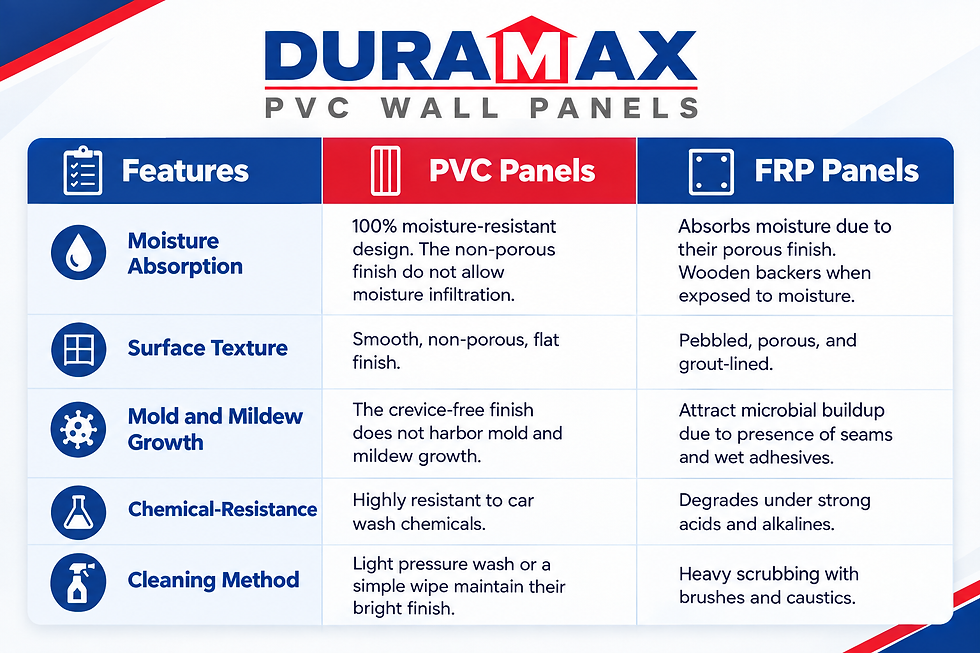
Drywall and FRP were common for lining car wash bays. They carry serious structural flaws when exposed to continuous water spray. Even moisture-resistant drywall becomes vulnerable to moisture absorption the moment water penetrates a tiny pinhole. Once the gypsum core gets wet, it crumbles and breeds black mold behind the wall. As a result, it calls for expensive tear-outs within just a few years.
The FRP installation method becomes highly susceptible to moisture absorption. FRP panels must be glued directly onto a backing board, typically drywall or OSB. In a humid car wash bay, water seeps behind the plastic seam strips and dissolves the glue. The result is unsightly bubbling, warping, and delamination. Once an FRP sheet pulls away from the wall, trapped water saturates the backing board underneath. This leads to foul odors and bay closures for patchwork repairs.
Here’s Why Vinyl Panels Are Built for Car Wash Bays
Vinyl walls for car washes eliminate the vulnerabilities of glued-on plastic sheets and porous wallboards. Made with 100% pure vinyl, these rigid panels are water-resistant and do not rely on moisture-sensitive adhesives. Each panel features tongue-and-groove edges that lock tightly together, forming a sleek wall surface that sheds water instantly. With no absorbent gypsum or wood backing required, moisture has nowhere to hide or cause rot.
Features of Vinyl Panels That Make Them Reliable
Sturdy Construction that Prevents Moisture Seepage
Manufactured from pure virgin vinyl, PVC panels create an impenetrable barrier against continuous water spray, steam, and condensation. Unlike recycled plastics or porous wallboards, this solid material never absorbs moisture, swells, rots, or supports hidden mold and mildew. By keeping the underlying building structure dry, these panels protect your property investment and eliminate the recurring tear-outs common in high-humidity car wash bays.
Heavy-Duty Internal Truss Design
½-inch-thick vinyl panels come with an inner truss design that provides exceptional structural rigidity and strength. In busy self-serve bays and automated tunnels, walls frequently take hits from stray high-pressure spray wands, hose reels, and maintenance carts. This reinforced webbed design absorbs heavy physical impacts without denting, cracking, or shattering. This keeps your bay walls intact and sealed against water intrusion, even after years of heavy daily traffic.
Superior Chemical Resistance and Class A Fire Rating
Car wash bays need aggressive alkaline presoaks, acidic wheel cleaners, and waxes that rapidly corrode metal and strip painted walls. PVC panels are highly resistant to chemicals, standing up to harsh automotive detergents and road salts without discoloring, pitting, or degrading. They are also ASTM-certified and carry a Class A fire rating. This gives facility owners peace of mind that their interior walls meet strict fire safety codes.
High Light Reflectivity
Vinyl car wash walls have a light-reflective property that spreads and reflects light in all directions. Improved visibility creates a safer environment for staff when cleaning vehicles while making the entire facility look cleaner and more modern. This reduces the need for excessive lighting fixtures. By installing light-reflective vinyl panels, you can reduce utility costs over time.
Adhesive-Free Installation
Traditional wall coverings depend on messy glues and moisture-vulnerable backer boards that fail when exposed to constant dampness. PVC panels attach mechanically straight onto existing framing or drywall using a tongue-and-groove interlocking mechanism. This eliminates adhesives and plywood substrates from the installation process. This streamlined system cuts labor time and material expenses in half.
Practical Maintenance Tips for Vinyl Panels
Vinyl wall cladding is designed to be virtually maintenance-free. Following a few simple care habits will keep your wash bays gleaming like new for decades.
Perform Quick Weekly Rinses
Road grime, bug residue, and overspray from tire shine can leave a dull film over time. At the end of each week, use a standard low-pressure hose to rinse the walls from top to bottom so dirt does not accumulate on the surface.
Use Non-Abrasive Tools
When wiping down stubborn grease, use a soft microfiber cloth or soft-bristled brush. Avoid harsh abrasive scouring pads, which can dull the glossy finish.
Inspect Trim and Sealants Annually
You should always walk the bays and check the electrical outlets and ceiling transitions. Reapply fresh waterproof sealant to any worn joints to keep your wall and ceiling watertight.
Explore Duramax Vinyl Panels for Transforming Car Wash Facility
Duramax introduces vinyl car wash wall panels that are lightweight, durable, and moisture-resistant. Duramax Vinyl Panels are FDA-compliant, CFIA-certified, and backed by a limited lifetime warranty. Available at factory-direct pricing, we ship vinyl panels to your destination within two weeks. Save 50% on labor and 40% on material expenses with Duramax Vinyl Panels. Visit our website for more details.


Comments